Archive | Featured

Tags: , ,

World’s Largest Underwater Museum

Posted on 04 March 2010 by Nevin

Cancun’s National Park West Coat of Isla Nujeres is currently the site of the world’s largest underwater museum, which when completed will feature more than 400 concrete sculptures of figurines.

sculp4

Cancun’s Marine National Park facing the increased pressure of the 750,000 tourist that flock to its coasts each year combined with the devastating effects of climate change, has been the cause of its dying and declining coral reefs. In an effort to lure away some of the tourist from the reef, the Mexican Government commissioned the creation of the underwater museum at a cost of  US Dollars 350,000 featuring sculptures created by  renowned British underwater sculptor Jason de Caires Taylor.

sculp1

Jason de Caires Taylor is the underwater artist who created the world’s first underwater sculpture park at Grenada in the West Indies, and draws on both Mayan and Contemporary influences to design his masterpieces. Using a PH Neutral concrete to design each of his 400 sculptures, the intent is to encourage algae and coral to freely grow on the concrete which will cause these sculptures to change appearance over time and form an artificial ecosystem where tiny fish and marine creatures can thrive.

sculp2

Each sculpture has been carefully lowered at varying depths around the National Park, the first installation taking place in November 2009 when the museum opened with just three sculptures. By April 2010 it is expected to have over 250 sculptures ready and installed with the target of 400 to be standing by by 2011. Authorities say that after the target is reached, the museum will be opened up to other artist that will be allowed to contribute to the collection.

sculp3

The Marine Park Museum is a stunning place to dive and a unique experience to move around from sculpture to sculpture. Both Scuba divers and snorkelers can visit the museum, and experience the eerie human almost lifelike forms submerged in the blue.  With age these sculptures will constantly change in appearance drawing people back to them just to see how they’ve progressed with time.

sculp6

Comments (0)

Tags: , , , , , , , , , , , , ,

Best Dive Sites: Top 15 Dives to Experience Before You Die

Posted on 24 February 2010 by Noreen

With literally thousands  and thousands of dive sites across the World, each with a unique underwater landscape and marine life, not to mention sites yet to be discovered, it’s near impossible to say with absolute certainty that a particular dive site is No.1! Plus, everyone has different ideas about what makes “the best” dive site. However, there some dive sites that always seem to come up in conversations about best dives and have a built reputation among the diving community as the cream of the crop. So while diving experiences anywhere depend on personal perspective as well as a number of other factors like type of dive, weather conditions, visibility, currents and luck as to what you see that day, there are some dive sites definitely worth a visit.

Here’s a look at some of the top rated and most popular dives (in no particular order) to dive before you die -

1.Best Cave/Cavern DivesCenotes of the Riviera Maya, Mexico

The Best Dive Sites of the World - Cenote-Diving-Riviera-Maya

The freshwater-filled limestone sinkholes known as Cenotes situated in the state of Yucatán, Mexico lead to some of the most beautiful and intricate underwater caves and caverns in the World. The natural beauty of these cenotes and caves, with its crystal clear turquoise waters, sunlight reflecting stalactites and stalagmites are truly enigmatic works of art drawing divers the world over to explore its waters. With over 3000 Cenotes, 1400 of which have been studied and recorded it’s impossible to pick just one as the best. The Riviera Maya has the World’s three longest running underwater Cave Sytems – Ox Bel Ha (146.7Km.), Nohoch Nah Chich (61Km.) and Dos Ojos (57.7 Km.). Cenote Dos Ojos, Cenote Tajmahal and Gran Cenote are some of the notable cenotes here. (For more read: Cenotes: The Underwater Caves of The Riviera Maya, Mexico)

2. Best Wreck DiveSS Yongala, Ayr, Australia

The Best Dive Sites Of The World- SS Yongala

Rated 6th on our list of the World’s Top 10 Wreck Dives, but possibly the most popular wreck dives of all times and highly rated by thousands of divers the world over is the SS Yongala at the Great Barrier. This enchanting Australian passenger ship lying within the Great Barrier Reef Park lay undercover for over half a century since it sank in a cyclone in 1911. Today home to giant groupers, schools of trevally, cobia, turtles and sweeping rays among plenty of others, the ship is only a 30minute journey from the shore. The incredible array of marine life that accompanies the wreck is unmatched. From eagle rays, tiger sharks, bull sharks, giant grouper, turtles to swarms of giant barracuda and schools of bait fish that covers more than the eye can see, the SS Yongala is a Wreck dive site teaming with more life than many a coral reef! (For more read: World’s Top 10 Wreck Dives)

3. Best Wall DiveBlue Corner Wall, Palau, Micronesia

The Best Dive Sites Of The World - Blue Corner Wall, Palau

Palau in Micronesia is diving hot spot and unarguably one of the best dive destinations in the World! The 200 islands of Palau are surrounded by breathtaking fringing coral reefs, crystal caves and WWII wrecks. Of all attractions on offer to diver’s delights though, the drop off’s and wall dives are in a class of their own. Recognized as one of the best wall dives in the world due to its concentration of marine life, the Blue Corner Wall at the northwest end of Ngemelis Island.This dive site features a shallow coral shelf that projects out into the ocean and has vertical walls on both sides. Not for the faint of heart, this is an advanced dive with sometimes very strong and unpredictable currents which brings in schools of fish and large pelagics to the top edges of the walls. The wall drops from 30 to 1000 feet (10 to 330 meters) or more and is covered with large variety of giant Gorgonian sea fans, hard corals and soft corals.The flat coral plateau on the top extended between the two walls and drops gently on the west to about 45 to 60 feet (15 to 20 meters). Covered in colonies of cabbage corals as well as many varieties of hard and soft corals make the wall a fantastic place for some underwater photography. But, it’s the large schools of fish that makes this site as famous as it is. Sharks, Wahoo, Tuna, Hawks Bill and Green turtles, Eagle Rays, Giant Groupers, and Barracuda, to name but a few species. Two resident Napoleon wrasses often accompany the divers throughout their dive. Diving here almost guarantees you great stories to tell friends and and marine encounters you’ll never forget!

4. Best Manta Ray Dive- Manta Ray Night Dive, Kailua Kona, Hawaii

The Best Dive Sites Of The World - Manta Ray Night Dive, Kona Hawaii

The Kona Coast is one of the best places in the world to get up close and personal with manta rays. Often described as an experience of  lifetime when one chances on one of these magnificent creatures, dive operators in Hawaii plate up this experience with night dive twist making it just spectacular. Divers are given underwater flashlights and are directed to point their beams towards the surface.  The bright lights attract hordes of plankton which in turn bring the mantas as well as a ton of other fish to the vicinity. Much to the delight of divers and snorkelers even the manta rays often swoop, turn and even somersault towards the light where the plankton is plentiful displaying the surprising agility of this creature. More than 60 individual Mantas identified by spots on their underside, have been photographed, cataloged and named as regulars on the Manta Ray Night Dives. (For more read: Must Dive Sites: The Manta Ray Night Dive in Kailua Kona, Hawaii)

5. Best Deep DiveLighthouse Reef Blue Hole, Belize

The Best Dive Sites of the World -  Lighthouse Reef Blue Hole, Belize

More for an adventure dive rather than for the reef or marine life, the Belize Blue Hole is a World famous deep dive site. The almost perfectly circular Blue Hole was created by what was a dry cave system in the Ice Age and is an amazing sight from an areal view as it’s over 1000ft (300 meters) in diameter and 450ft (135 meters) deep. The caves have stalactite formations where the reef is at 110 feet and you can often see hammerhead sharks lurking in the shadows. More a thrill for it’s inky blue depths and upward view of a passage to the sky, the Blue Hole is a hotspot for divers. When it comes to Blue Hole Diving, the Belize Hole is the most well known of the lot. (For more read: Blue Hole Diving and The Most Rewarding Dive Spots In The Caribbean)

Continued in Best Dive Sites: Top 15 Dives to Experience Before You Die -2 includes…

6. Best Drift Dive – Santa Rosa Wall, Cozumel, Mexico
7. Best Ice Dive – Mc Murdo Sound, Antarctica
8. Best Night Dive - Maaya Thila, Maldives
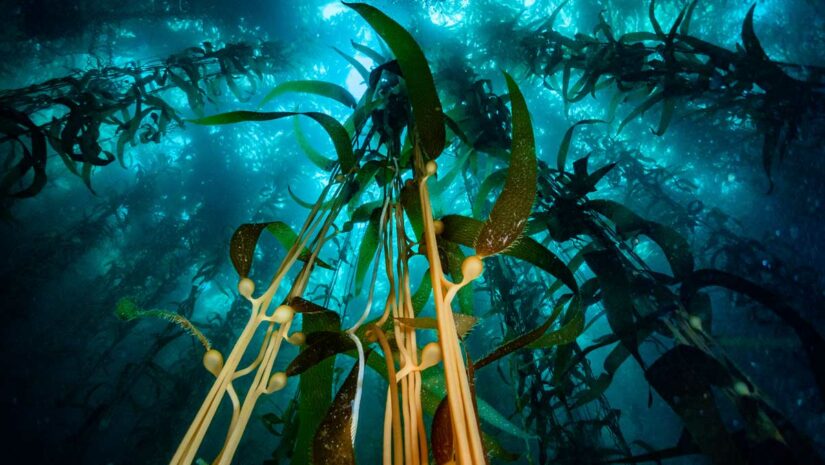
9. Best Kelp Dive – San Clemente, Channel Islands, California

10. Best Coral Reef Life Dives – Sulawesi, Indonesia

Best Dive Sites: Top 15 Dives to Experience Before You Die -3 which includes…

11. Best Big Fish Encounter Dive – Sipadan Island, Borneo, Malaysia
12. Best Shark Dive - Gansbaai, South Africa
13. Best Whale Shark Dive – Richelieu Rock, Koh Tachai, Thailand
14. Best Shore Dives – Bonaire, Netherlands Antilles
15. Best Liveaboard Dives – Sharm El Sheik and Ras Mohammed, Egypt

*Photo Credits: photos by dMap Travel Guide, stuandgravy, Daniel, Daniel Kwok, cwilso, catherinetodd2 on flickr

Now Travel to your favorite Dive Destinations and plan your Scuba Holidays with LeisurePro.com

Dive Travel Deals

Comments (3)

Tags: , , , , , , , , ,

Creatures of the Ocean & Amazing Facts

Posted on 12 February 2010 by Noreen

Did you know that nearly 71% of the Earth’s surface is covered by oceans and 80% of all life on earth is found under the ocean surface! In fact, the oceans contain 99% of the living space on the planet. The the largest animal on our planet ever(larger than the greatest dinosaurs), the blue whale still lives in the ocean and it’s heart is the size of a Volkswagen. Here are some more fascinating facts about interesting creatures of the ocean-

The Octopus

Creatures of the Ocean- Octopus Facts

  • Octopus has three hearts and its blood is light blue.
  • An adult octopus can squeeze through a hole the size of a 10-cent coin.
  • Octopuses are completely deaf.
  • An octopus can detach itself from its arm and to escape from predators and can later regrow the limb, with no lasting ill effects.
  • The blue-ringed octopus, merely the size of a golf ball, is one of the most poisonous animals on earth!

Seahorses

Creatures of the Ocean - Seahorse Facts

  • Seahorses are the only animals in the entire animal kingdom in which the male, not the female gives birth and cares for their young! The female seahorse deposits the eggs into the male’s small pouch like a kangaroo where the eggs are fertilized and where the baby seahorses grow until it is time for them to be born.
  • Seahorses are monogamous and mate for life! Every morning, they come together with their partner, dance, change their color, twirl around with linked tails and then separate for the rest of the day.
  • While mating, seahorses utter musical sounds.
  • Sea horses have a voracious appetite and can they graze continually and consume 3,000 or more brine shrimp per day.

Sea Turtles

Creatures of the Ocean - Sea Turtle Facts

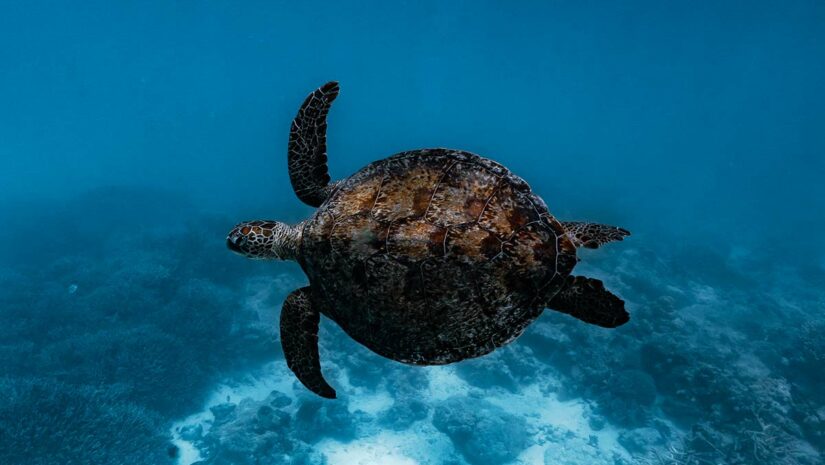
  • Sea turtles excrete salt absorbed in sea water from their eyes, which is why they seem to cry.
  • Turtles live on every continent except Antarctica.
  • Turtles range in size from the 4-inch Bog Turtle to the 1500 pound Leathery Turtle.
  • The leatherback turtle is the largest sea turtle at 6 and a half feet long and weighing up to 1,500 lb.

Jellyfish

IMG_4390-271

  • Jellyfish have been around for more than 650 million years which means that they outdate both dinosaurs and sharks
  • A jellyfish’s body consists of over 95% water
  • The Box jellyfish has 64 anuses
  • The Box jellyfish (sea wasp) kills more people than any other marine creature each year. Its sting can kill in 3 minutes… and it can move at almost 2 meters per second. If stung, the odds of getting back to the shore, or even Surviving are almost Zero. The amount of venom in a Box Jellyfish could kill 60 people
  • The worlds largest known jellyfish can reach a diameter of 2.5 m / 8ft and its tentacles can grow to be half the length of a football field.

Crabs

Creatures of the Ocean - Crab Facts

  • Crabs teeth are in their stomachs
  • The Japanese Spider Crab is the oldest crab of the world and is also believed to be the most deep-living crab as well as the one with the longest lifespan. It has a walking leg span of 3 to 4 m, which can go to 8 m when outstretched.
  • 8. 1 million tons of crabs are eaten annually in restaurants and homes all over the world

*Photo Credits: photos by Morten Brekkevold, San Diego Shooter, Bemep, lassi.kurkijarv, LightIsBeauty on flickr

Visit LeisurePro.com for the latest and best in Scuba Gear and Equipment

Shop at LeisurePro- The Diver's Emporium

Comments (1)

Tags: , , , , ,

Diving With The Rays at Stingray City, Grand Caymans

Posted on 03 February 2010 by Noreen

Rays are among the top things divers like to see on dives along with turtles, sharks, schools of barracuda, whale sharks and so on. With a wide variety of rays from the stingrays, whiptail stingrays, eagle rays, marble sting rays  and manta rays, it’s always a thrill to see one. There are just a handful of spots around the World are hugely popular for sheer number of rays and a chance to swim, snorkel and of course scuba dive with these creatures.

Stingray city, Grand Cayman

To truly experience this ancient creature almost untouched by time, the best site worth mentioning and the most popular is…Stingray City in North Sound of the Grand Cayman Islands.

Swimming with Stingrays, Grand CaymanA natural channel passes through the barrier reef here in the shallow waters in the corner of North Sound of the Grand Cayman Islands. Filled with a string of sandbars the stingrays were drawn here over the years as they became accustomed to feeding off of unwanted fish parts thrown overboard by the local fisherman cleaning their daily catch. Soon they became a permanent fixture and got used to humans feeding them and climbing into the water with them.

Today, thousand of tourists particularly as part of a cruise ship attraction visit Stingray city to swim, feed and interact with the Southern stingrays. Rated one of the “best snorkeling experiences in the world”, snorkeling is one way of rubbing elbows with one of the potentially dangerous animal. Grand Cayman, Stingray CityHowever, these stingrays are a friendly bunch gathered for an easy meal and aren’t dangerous if not threatened. The snorkeling here takes place in the heart of the sandbar where the water is only 3 to 5 feet deep. The crystal clarity of the waters and numerous stingrays on the sandy bottom is just a treat not to mention when they rub up against you or even wrap their wings around you.

For the ultimate stingray experience however, the best trip to stingray city has to include diving with them. The scuba diving at stingray city is on the deeper part of the sandbar where the water is 12 to 20 feet deep and is sans fins. Groups of ten to twenty divers gear up with no fins (to avoid hurting the rays by accident) and extra weights to stay down on the sandy bottom. Instructed to form a circle, the divemaster hands out pieces of fish and squid to feed the rays. In no time the intelligent creatures have sensed their meal and swarm around the divers caressing them with their bodies and wings, urging you to give them the grub. They’re not aggressive so as to say and the chances of being stung are very slim as it’s mostly a defense mechanism and they don’t have teeth to bite, so it’s relatively safe. They suck up the food through their mouth, located on its underside and if you happen so see one from its underside you can actually see right through them.

Diving with Stingrays, Grand Cayman

Taking a glass bottom boat ride is also an option at Stingray city but if you’re game for it the up close and personal experience of snorkeling or better still scuba diving with the ray we feel is the thing unforgettable memories are made of!

* Photo credits; photos by petersbar, vixendoll13, Paul-W, ebatty on flickr

Shop at LeisurePro- The Diver's Emporium

Comments (1)

Tags: , , , ,

5 Easy and Practical Tips for Taking Underwater Macros

Posted on 27 January 2010 by Noreen

Underwater MacrosMacro photography underwater is such a joy with the numerous and various macro worthy sea creatures out there. For all types of Underwater photography it’s important to understand the basic of photography like Aperture & Depth of Field, camera settings and types of lenses. It’s also crucial in underwater photography to know how light works underwater. For these you may read our previous posts:

Underwater Photography: Basic Tips for Taking Good Underwater Pictures
10 Underwater Photography Tips for Beginners
Understanding Light for Underwater Photography
Using Filters for Underwater Photography

1. Use the right macro photography equipment
For this up close and magnified way of photography it’s best to use a macro lenses (which can range from 50mm to 200mm) depending on the focal length you desire. The the longer the focal length of the lens, you can be farther away from the subject for a shot, which is important while capturing fish that are skittish and won’t allow you close enough for a good picture.

Underwater Macro TipsA 100mm / 105mm is better for shooting smaller animals. It allows you to get the exact size of the subject without having to get very close to it. But, it does have a tighter angle of view than the 60mm which has a wider angle of view. The 60mm lets you capture slightly bigger subjects, but at very close range. For beginners, it’s best to start with a 60mm as it’s less frustrating than the 100mm/105mm which can be hard to get it to focus just right.

The use of external strobes is almost as important as the camera itself in underwater photography and especially macro photography. As this type of photography uses small apertures and you shoot at close range, strobes provide that much needed source of light on the subject thereby adding true colors to your photographs. Use of just the internal flash which is usually located above the lens is not appropriate for underwater photographs as it creates backscatter. Two external strobes on either side of the underwater camera is the ultimate, but the use of one strobe at least required and affordable.

2. Get Close
Getting as close to the subject as possible is an underwater photography basic rule. In macro photography you have to take it up a notch and get even closer than close. The less water between you and the subject, the sharper your picture will be and the more effective the strobes will be in capturing colors.

Underwater Macro Photogaphy Tips

When trying to get close it’s very important to watch your buoyancy and not bump into coral or disturbing the environment. Care must also be taken as to where you put down your camera or what you touch to steady yourself. Avoid touching anything at all if possible.

3. Picking the right moment
Photographing fish and marine life is all about the right timing. Your best bet to get a decent fish portrait is finding a subject that wants to be photographed or is too slow to notice you. Then position yourself and the camera keeping your finger on the shutter, preferable half depressed. Tips for taking underwater macrosThen watch the fish closely and not the camera to click at the just right moment. It can take time to get the subject in a good position, but the key is patience.

If you’re a beginner in macro photography pick a slow moving creature like a nudibranch where you can take your time to take a shot and actually capture several shots before it moves. On the other hand photographing a fish is not as easy as it seems. They constantly move and just when you think you’ve got them where you want in the frame, the second before your finger presses down on the shutter button, it has darted out the frame. The only thing you can do is move very slow and cautiously without drawing attention to yourself or scaring off the fish, it’s easier said than done, but is the only way of getting a good picture.

4. Pick a contrasting background
You may have noticed that a lot of underwater macros feature a black or deep blue background. This is because the photograph was take from an angle where there is a lot of open water behind it. Where possible shooting at an upward angle will ensure this sort of backdrop and makes the subject stand out.

Underwater Macro Photography tips

However, most times it’s not possible to to have a empty space behind the subject, so try to find a subject on a contrasting and not too distracting background. Since macro shots tend to blur the background which is not in focus, you want to avoid a background darker than your subject. A contrast color or pattern works best at maintaining focus on the subject and creates a better composition for the photograph.

5. Focus on the Eyes
If you’re shooting a fish, the best point of focus is the eyes. The most interesting visual position for a fish portrait is the front view of the fish or creature. For this, you should select it’s eyes as the focal point. If you want to focus on the eyes and mouth try focusing between the two. To get the whole fish in focus, you should try positioning yourself parallel to the subject and get a side shot for the best depth of field.

Tips for Underwater Macro Photography

*Photo credits: All Underwater Macro Photos by doug.deep on flickr

Shop at LeisurePro- The Diver's Emporium

Comments (0)

Tags: , , , , , ,

Top 5 Shark Diving Destinations in the World

Posted on 13 January 2010 by Noreen

Of all the the creatures on this planet Sharks have earned quite the reputation, good and bad. Some admire this fierce predator of the seas while most have a fear of of the creature that even keeps them out of the waters.  For those of you that fall in the second category you may want to read our post on Overcoming The ‘Jaws’ Factor When You Dive cos this post isn’t for the faint hearted. For those of you ready to face your fear or or undertake the seemingly insane pursuit of intentionally taking the plunge in shark infested waters here are the Top 5 Destinations in the World for Diving with Sharks-

1. Gansbaai, South Africa
For what nightmares are made of, there’s no where in the World like South Africa to encounter the so called ‘man-eater’ Great White. 12kms offshore from Gansbaai (160km from Cape Town), there are two islands Dyer Island and Geyser Rock where all the action takes place. The islands covered with seals and jackass penguins are like a ready to eat fast food meal for the sharks who patrol the shallow and narrow channel that runs between the two islands, as if they were at a McDonald’s drive-thru.

Top Shark Diving Destinations- South Africa

Jump in a cage here an all that’ll separate you from the most feared shark in the sea is a few metal bars. It’s a front row seat to watch the dinning frenzy and maybe a closer encounter with a curious great white when it checks out your cage. You’re guaranteed you’re moneys worth and an experience of a lifetime.

2. Nassau, Bahamas
Think cage diving is for wussies? Want a little more thrill and excitement? How about coming face-to-face with tens of reef sharks without the metal protection. Nassau attracts tons of divers every year to witness a swarm of reefies in a feeding frenzy. The difference however is that the sharks are lured by the dive master/operators dressed in chain-mail that feed them while the other divers play spectators down below unnoticed by the hungry sharks.

Top Shark Diving Destinations - Nassau, Bahamas

With no cage or protection the thrill of this high can be described as a powerful dose of prozac. Shark encounters include tens of blacktip or white tip reef sharks circling you feeding on bait and on rare occasion and run in the daddy of all sharks -the great white.

3. Rhode Island, United States
A combination of frigid waters and plenty of sharks makes this one of the top shark diving destinations. Point Judith, three hours offshore of New England may not seem like a great place to dive, especially since the Atlantic’s bone-chilling waters aren’t very inviting. However, the migratory blue sharks have made it their pit stop on a long journey to the coast of South America.

Top Shark Diving Destinations-Gansbaai, South Africa

Pulled in by chumming the waters (throwing in bait to lure sharks and fish), the blue sharks are drawn here for the diving which is done from a cage. Their slender bodies and pointed snouts are quite distinguishably different form other shark species. The fearless may opt to go cage-free but this isn’t advisable.

4. Cocos Island, Costa Rica
A must dive site for shark diving enthusiasts, Cocos Island is a unique spot to dive with literally hundreds of hammerhead sharks. Ranked as the 6th Best dive site by the PADI network, it’s a live-aboard only dive destination as it’s situated some 300 miles off the main coast of Costa Rica.

Top Shark Diving Destinations-Cocos Island, Costa Rica

The silhouette view of swirling hammerheads as you gaze up on a dive here is an intense and almost surreal diving experience. The sheer numbers of hammerheads is shocking and makes you wonder if there are any fish left around there. Apart from hammerhead sharks, white tips, bull and whale sharks are frequently spotted in these parts too.

5. Rocas Atoll (Atol das Rocas), Brazil
A lagoon off the coast of Brazil in the Brazilian State of Rio Grande do Norte, 260 km (160 mi) northeast of Natal is volcanic formed island. This atoll was designated by UNESCO as a World Heritage Site because of it’s rich marine and coral life. The warm waters in this area are home to a caucus of brightly colored tropical fishes, coral reefs and it’s predator—the lemon shark.

Top Shark Diving Destinations - Atol das Rocas, Brazil

With a thriving population of lemon sharks here, which pose very little threat to humans it’s possible to dive with a school of about 30 sharks at once making it a tangy experience.

*Photo Credits: photos by manoellemos, Le Grand Portage, underwatertourist, twellsv, AlKok on flickr

LeisurePro- Travel

Comments (3)

Tags: , , , ,

25 Ways to Tell You’re Addicted to Scuba Diving

Posted on 10 January 2010 by Nevin

You Know you’re Addicted to Scuba Diving When..

1.You flunked high school physics but you amazingly  can calculate the partial pressure of a gas in equilibrium and its solubility and absorption rate by the body during a dive using Henry’s Law!

2. Every morning the sound of shaving foam (psshhhht) makes you want to go diving.

3. You’re the only one out of your office buddies that doesn’t snicker when the word “Off-gassing” is mentioned.

Scuba Humor- Addicted to Scuba Diving

4. You get out of bed in the morning by doing a back-roll.

5.You’ve never watched Star Wars but you’ll watch “The Abyss”, “Men Of Honor” or “Deep Blue Sea” 100 times.

6. Then you finally start watching the Star Wars movies and think to yourself “Man, Darth Vader really needs to get that regulator replaced”

7. You show up at your neighborhood swimming pool during the off-season in full dive gear hoping to log some bottom time.

8. You’re the only one who isn’t blushing when you ask your friends, “Want to see some Nudi pictures?

9. You have more ‘C’ cards than credit cards in your wallet.

10. You’re more worried about your divers insurance payments than your health insurance.

11. Your preferred method of getting high is to get ‘narced’ on a deep dive.

12. When your kid’s first words are PA-DI instead of Dad-dy.

13. You see a perfectly good ship and think that would make a nice wreck to dive in.

14. You spend most of your time picking apart the unrealities in the latest Hollywood diving flick rather than watching the movie.

15. You automatically equalize your ears by performing the valsalva maneuver every time you step into an elevator.

16. You answer “Suunto” when asked what kind of computer you use.

17. You spit on your car windshield to prevent it from fogging up.

18. You can’t afford a wristwatch cos you spent all your money on an expensive dive computer instead.

19. While others long for Rolex, Omega or Tag Heuer on their wrists you’d settle for a Mares, Suunto  or Oceanic.

20. When you think your neighbors’ vacation to Belize was a waste of money cos they didn’t do any Scuba Diving.

21. When getting a “reverse squeeze” has nothing to do with your girlfriend grabbing your butt!

22. You can’t remember your wedding anniversary but always know when Discovery Channels “Shark Week” is on.

23. You get excited about the viz while you go swimming in a pool.

24. The only suit in your closet besides your wedding suit…is your wetsuit!

25. And you need serious help… if your wedding suit IS your wetsuit.

*Photo credits: photo by joeduty on flickr

Shop at LeisurePro- The Diver's Emporium

Comments (1)

Tags: , , , ,

James Cameron’s Love for Scuba Diving Shows in Avatar

Posted on 04 January 2010 by Noreen

It’s a pretty well known fact that Canadian film director, producer and screenwriter- James Cameron has a love for the Ocean and of Space & Alien life. One of the most well known Celebrity Scuba Divers, his love for these two subjects is apparent in most of his movies right from the ‘Alien’ series, ‘Titanic’, ‘The Abyss’, ‘Volcanoes of the Deep Sea’ and is even clearly seen in his latest blockbuster and superhit movie ‘Avatar’. Now you’re thinking, you get the Alien bit about ‘Avatar’, but you don’t see anything to do with the Ocean, right? Well if you look closely, Cameron’s influence of Scuba diving and love of the sea with it’s fascinating and unique life is deeply embedded in the movie.

James Cameron's Avatar

Avatar- Christmas Tree WormSome of the computer generated flora and fauna in the movie Avatar have an uncanny resemblance to marine life which Cameron himself has admitted to being influenced by in interview about this movie and his past work. Remember the scene where Jake Sully (Worthington) wonders off distracted by his surroundings, while Dr. Grace (Sigourney Weaver) and biologist Norm were busy collecting samples,  he comes to a patch of rather tall spiral looking flowers they call ‘Helicoradian flowers’. On his touch the flowers shrink or rather retract into the ground…sound familiar to the Christmas Tree Worm you’ve seen when you went diving? Only the Christmas Tree Worm is a lot smaller than in the movie as seen in the picture above.

James Cameron's Scuba Diving Influences in Avatar

How about the seeds of the sacred tree Eyra? Their movement seem strangely familiar to that of jellyfish? Well these similarities to marine life in Cameron’s movie are far from coincidences.

James Cameron Scuba Diving Influences in AvatarAvatar- Jellyfish

James Cameron has previously been quoted saying-James Cameron- Avatar

“I learned to scuba dive in a pool. It wasn’t until I moved to California that I ever even scuba dived in the ocean. But I just loved it. I loved this idea that there was this alien atmosphere right here on planet earth. I knew that I was never going to be an astronaut and visit another star system or land on another planet, but I knew I could explore an alien world right here.”

- James Cameron

When asked about his Aquatic influences in an interview about Avatar, he replied:

Avatar- James Cameron“I just swept in every design influence in my life. I’ve always had this deep respect for nature and a lot of my youth was out in the woods hiking around. I was a total science geek. I spent over 2,500 hours underwater and I’ve seen things that are absolutely astonishing on the bottom of the ocean. It really is like an alien planet. I’ve always felt like that’s something I’ve been able to do was live out a science-fiction fantasy adventure for real in my diving work. So yeah, there’s a lot of stuff there. There’s even a lot of stuff in the shallow ocean that’s influenced things. The Banshee wings are based on the colourations of tropical fish, for example. We were a little concerned that these large creatures wouldn’t scale with these incredibly vivid colour patterns, but we managed to make that work.” - James Cameron (see full interview)

It also comes as no shocker that Cameron’s next project is yet another water influenced movie titled ‘The Dive’ based on a true story of a Cuban free diver Francisco “Pipin” Ferreras and Frenchwoman Audrey Mestre who went on to break several world records under his guidance before dying in 2002 while competing. “It’s a drama, a love story,” Cameron said. “This will require underwater photography, which will look gorgeous in 3-D.”

So, we’re certain to see more of Cameron’s scuba diving influences in his future endeavors. And when you watch the much talked about sequel to Avatar which is speculated, keep your eyes peeled for more such similarities to the water world.

*Photo credits: photos by Nick Hobgood, Loimere on flickr

Shop at LeisurePro- The Diver's Emporium

Comments (10)

Tags: , , , , , , ,

A Cool Twist to Fins- Amphibian FlipFins from Omega Aquatics

Posted on 02 January 2010 by Noreen

All Scuba divers know the importance and what a difference good dive fins can make underwater. But, they’ve also faced the awkwardness and inconvenience of walking around with fins on land. That’s why  the convertible fins from Omega Aquatics came as a breath of fresh air, solving the mobility issue we’ve previously faced with regular fins.

Omega Aquatics- Flipfins

Every diver has at some point had the dilemma of whether to waddle across a boat in your dive fins to get to the gate, or the use good dive boat etiquette and carry your fins in your hands till the gate an then put them on in a balancing act with the heavy scuba gear and tank strapped to your back.  Shore dives too pose the same problem of walking in fins while entering the water. The Amphibian range of  FlipFins is the perfect solution of to both these scenarios and more. The convertible fins are designed to be half fin, half shoe that fold up out of the way allowing you to walk freely out of the water and click down with your first kick once you’re in the water turning into fins.

Omega Aquatics Filpfins-  Amphibian finsFlipfins by Omega Aquatics

Omega Aquatics Amphibian Navigator Fishing FinThe Amphibian fins are made up of two pieces – the foot pocket and blade. They are connected by a special hinge called the “Aqua-Hinge,” that allows the blades of the fin to be pulled up so that the diver may walk normally, wearing the slightly curved foot pocket like a pair of overshoes. Once in the water, a normal kicking motion pushes the blades back down and locks them in place so they can be used like conventional fins. Omega Aquatics believed that their product was a natural evolution of fins and begun to sell the flipfins since 2007. They have been a hit with divers ever since.

Omega Aquatics Amphibian Classic Scuba FinNo more dive boat shuffle, no more doing the one foot dance trying to put on your fins after other dive gear, no more waddling around like a clown in oversized shoes and no more walking to and from the water with your fins in your hands instead of your feet. With the flipfins, the fins can be the first thing you put on and the last thing to take off when you scuba dive. They make walking around, airborne water entry and even climbing dive boat ladders with fins as easy as wearing ordinary shoes.

In the water, just one kick coverts these goofy looking shoes to high performance fins where you wouldn’t be able to tell the difference from other top scuba brands fins. Omega Aquatics in their attempt to make fins better out of water haven’t ignored the performance of these fins underwater. “The lightweight fin blade features a soft, central web configuration modeled after a duck web,” says Omega Aquatics, Inc. President and founder Ronen Moyal. “This design element contributes to increased propulsion and reduces the load required for sustained kicking. And with the interchangeable blade system, different types of divers will soon have a variety of choices when purchasing dynamic fins.”

Omega Aquatics Flipfins

So what are you waiting for? Didn’t you read the no more waddling part? Omega Aquatics’ Flipfins are available at the LeisurePro Store and website  www.leisurepro.com or for other authorized dealers visit www.flipfins.com for more information.

*images source: www.flipfins.com
**Products pictured above: Omega Aquatics Amphibian Navigator Fishing Fin, Omega Aquatics Amphibian Classic Scuba Fin available at LeisurePro.com

Shop at LeisurePro- The Diver's Emporium

Comments (0)

Tags: , , , ,

Scuba- Doo: Explore the Ocean on a Scuba Scooter

Posted on 29 December 2009 by Noreen

Imagine zipping around not on but underwater on a cool scooter, the Scuba bike from Scuba-Doo allows you to do just that and more. Unlike other Diver Propulsion Vehicles (DPV’s) where divers are required to be trained and wear heavy Scuba gear and equipment while using the contraptions, the Scuba-Doo doesn’t even need a dive mask let alone wear a BCD or scuba tank on your back.

Scuba-Doo's Underwater Scooters

The official Scuba-Doo website describes it as:

Scuba-Dooing means you don’t need to wear a mask or mouthpiece. The air tank and diving weights are on the Scuba-Doo motorised scuba bike.

You are seated on your Scuba-Doo, with your head and shoulders in a clear dome. Your air is constantly being replenished from a scuba tank, enabling you to breathe normally! (www.scubadoo.com.au)

ScubaDoo

At a rate of 2.5 knots and a max depth of 10m (32ft.) you can ride amongst the spectacular underwater world or remain stationary while you feed the fish. The best part about this underwater scooter is that it doesn’t require any specilized scuba training nor do you have to be a great swimmer to ride around on it. Even people with minor disabilities can enjoy this. Scuba Doo ScooterAll you need to do it sit on it and breath normally the fresh air replenished into the clear dome through the scuba tank carried on it, while enjoying the panoramic view of the underwater world. It’s an easy, relaxed and fun experience.

Released in 2004 for a whopping $17,000, the Scuba-Doo scooter is not exactly a scuba boy-toy for just anyone. It is however, a lucrative investment for resorts and tourist hire companies that buy the innovative high-tech toy to offer rides of about 60 – 90 minutes for prices that range from $50 to $65 on average.

So the next time you’re in Australia, Maldives, Malaysia, the Caribbean, Mexico, the Philippines or other tropical island resort, look out for these uber-fun scuba bikes to try out and go Scuba-dooing underwater! It’s a new and unique way to explore the ocean blues that comes with bragging rights.

*image source: www.impactlab.com

Shop at LeisurePro- The Diver's Emporium

Comments (1)