Most people familiar with scuba diving have heard horror stories at one time or another about decompression sickness (DCS). But what is it, really? It’s important for every diver to be aware of this potentially deadly condition so they can avoid it or at least know how to get treated for it before it’s too late.
What is Decompression Sickness?
Commonly referred to as the bends, caisson disease, or divers sickness/disease, decompression sickness or DCS is what happens to divers when nitrogen bubbles build up in the body and are not properly dissolved before resurfacing, leading to symptoms such as joint pain, dizziness, extreme fatigue, paralysis, and collapse.
Why is decompression sickness called the bends?
“The bends” is a colloquial or informal term that people often use when referring to DCS. The label comes from the associated joint pain, which is one of the many symptoms of this dangerous and potentially lethal condition.
What causes decompression sickness (“the bends”)?
As a diver descends further into the depths, pressure increases around the body, which causes nitrogen gas to be absorbed into the blood and tissues. This in itself is not exactly harmful, as nitrogen can be safely absorbed by the body to a certain extent. The problem occurs when the diver starts ascending and does it too fast, without giving the body enough time to safely expel the absorbed nitrogen.
During decompression, the nitrogen in the tissues naturally transitions from a dissolved state back to its gaseous state and is then expelled through exhalation. However, this is a slow and steady process that is relative to the length or depth of the dive, and rapid reduction of pressure around the body (such as when divers ascend too fast) causes this transition to occur within the tissues and the blood rather than in the lungs—which then leads to gas bubble formation.
In order for nitrogen to be released from the diver’s body at an acceptable rate, decompression stops must be performed when certain depths or dive times are involved. This is also known as off-gassing, during which decompression stops allow nitrogen to slowly escape from the body’s tissues and revert to small, harmless gas bubbles. When off-gassing occurs too rapidly, the diver may then experience decompression sickness.
Decompression Sickness Symptoms
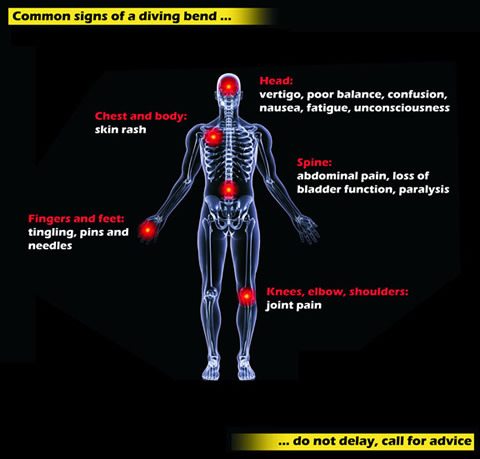
The most prominent symptom of decompression sickness is pain in the abdominal muscles or joints. More general symptoms include fatigue, red rashes all over the body, numbness, upset stomach, vertigo, and blurred vision.
When the diving pressure decreases at an unacceptable rate, the diver can suffer from several specific types of decompression sickness. Their severity can be narrowed down into two major types:
Type I DCS
Type I decompression sickness is the least serious and is not life-threatening. It typically involves pain around the limbs and joints due to nitrogen bubbles intensifying in the areas around the bone marrow or tendons, but can also manifest in the skin and lymphatic system. Symptoms include:
- Itching
- Swelling
- Mottled skin (or “skin bends”)
- Fatigue
- Feeling of skin “crawling”
Type II DCS
Type II DCS comprises the most serious forms of decompression sickness. Divers suffering this type can face tremendous complications. When nitrogen bubbles enter the nervous system, the entire body can be affected, at times one area more than others. If the present symptoms go untreated, paralysis or even death are possible.
The following manifestations of Type II DCS are considered the most extreme:
Pulmonary DCS
This occurs when nitrogen bubbles form in the capillaries of the lungs, leading to both respiratory issues and heart problems. In even more severe cases when gas is forced into the lung vessels, divers can suffer from a deadly injury called arterial gas embolism (AGE). Characteristics of pulmonary DCS are:
- Burning chest pain
- Dry cough
- Shortness of breath
Neurological DCS
Neurological DCS occurs when nitrogen bubbles travel through the bloodstream and make their way into the brain. This can create a number of physical symptoms as well as more serious neurological symptoms that can cause permanent damage, such as:
- Blurred vision
- Headaches
- Loss of consciousness
- Memory loss
- Unexplained mood swings
- Paralysis
- Numbness
- Incontinence
Because of the seriousness of DCS, divers are urged to create and stick to a dive plan to minimize any risk. But even the best-laid plan may contain a simple error or the diver could be suffering from a health complication they were previously unaware of, so anyone experiencing any of these symptoms should immediately seek medical attention.
Decompression Sickness Treatment

So how do you treat decompression sickness? It’s highly advisable for oxygen first aid to be administered, followed by recompression therapy for more severe cases.
During recompression therapy, the diver will have to be treated in a sealed, high-pressure diving chamber (also called the decompression chamber or recompression chamber), where hyperbaric oxygen will be administered using built-in breathing systems until the amount of oxygen in injured tissues or parts of the body has increased, swelling has reduced, and gas bubbles that have formed in the tissues and vessels have shrunk.
The treatment for decompression sickness can take about 1 hour and 40 minutes each day, or up to 12 hours for emergency cases. If you suspect that you or a friend are experiencing symptoms, here are the things you can do:
- Stop the dive.
- Calm down and avoid overexertion.
- Administer pure oxygen, if possible.
- If diver is unconscious, give first aid.
- Call for emergency.
- Drink plenty of liquids.
- Take note of symptoms or unusual conditions.
- Relay all symptoms once medical help arrives.
Long-Term Effects of Decompression Sickness
If a diver with decompression sickness is left untreated for a very long time, there’s always the risk of them suffering many of the more serious side effects mentioned above. Other long-term effects include difficulty in controlling urinary and bowel function, permanent damage to the nervous system, muscle weakness, and constantly recurring joint pain.
Prevention and Avoiding Decompression Sickness
There are no dive tables or dive computers that can guarantee 100% a diver will not get DCS. But if a diver learns how to calculate dive time properly, stays within safe depth limits and ascends slowly from every dive while taking recommended decompression stops, they can lessen their chance of getting bent.
When planning multiple dives in a day, do your deepest dives first and then shallower dives. Always carry out a 5-minute safety stop, even on a no-decompression dives to be on the safer side. Avoid flying 24 hours before or after diving.
ALWAYS plan your dive and dive your plan! Dive safe!