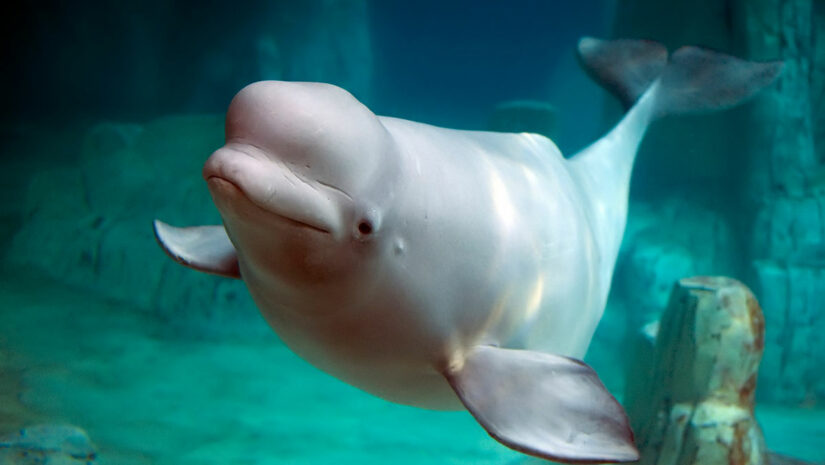
Cetaceans have captured the hearts of humans for ages, but none elicit quite as giddy of a reaction as does the beluga whale. Recognized instantly for its all-white or light grey coloring and oddly shaped head, the beluga whale belongs to the suborder of toothed whales, which includes dolphins and sperm whales. Despite being part of such a large group of cetaceans, the beluga shares its family lineage with only one other bizarre ocean mammal: the narwhal. Because of its distinct communication squeals, squeaks, whistles, and clucking, the beluga has also come to be known by the moniker “sea canary.”
What is a Beluga Whale?
Beluga whales, scientifically known as Delphinapterus leucas, are iconic marine mammals that captivate the imagination with their distinctive appearance and behaviors. Renowned for their pristine white coloring and charming smiles, belugas are medium-sized toothed whales that belong to the cetacean family Monodontidae.
Their name, “beluga,” is derived from the Russian word “belukha,” meaning white, aptly describing their striking coloration. With a bulbous forehead, known as a melon, and a flexible neck allowing them to turn their heads in all directions, belugas possess a unique and endearing charm. These social animals are often found in close-knit pods, engaging in intricate communication through a repertoire of clicks, whistles, and chirps. Beluga whales embody the enchanting allure of the ocean, making them a sought-after sight for divers eager to witness the beauty of marine life in its purest form.
Characteristics
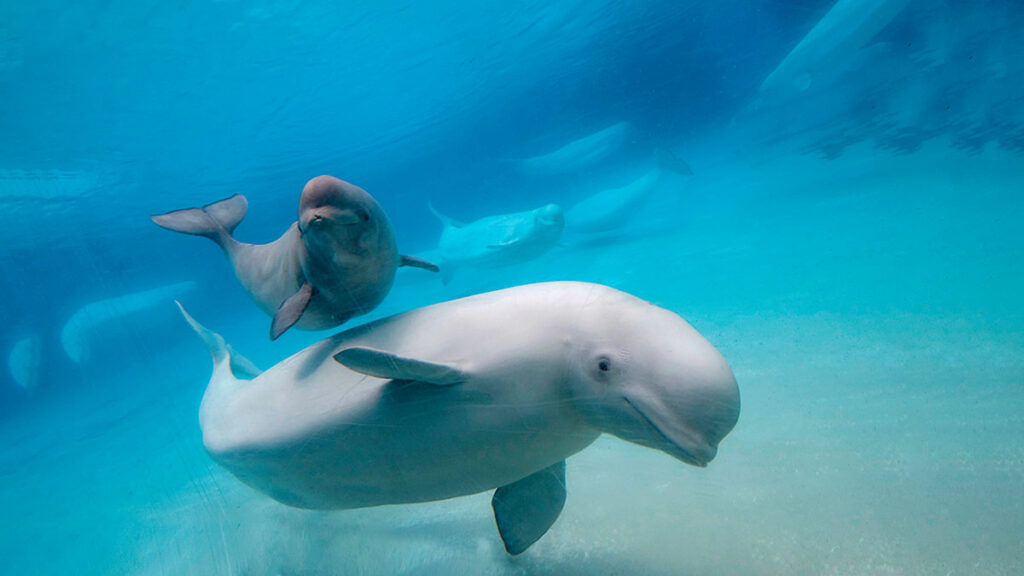
Beluga whales, also known as the “canaries of the sea,” are enchanting marine mammals with distinctive features that set them apart. These creatures are instantly recognizable by their unique coloring and rounded foreheads.
Belugas, like dolphins, have a long history of interaction with humans, many of which have involved lifesaving actions. In 2008, a Japanese researcher at the Kamogawa Sea World outside of Japan reported that he had taught a resident beluga to “talk,” that is, to communicate effectively with humans. The scientist recorded specific sounds of the beluga’s “vocabulary” and trained it to associate certain objects with a particular sound that he would play back to the whale, meeting with great success. This scientist’s research not only demonstrates the beluga’s aptitude for learning, but opens the door for possible communication with cetaceans in the future.
Body Composition
The physical makeup of the beluga whale is markedly different from that of any other cetacean. Although the bulbous protrusion on its head, known as a melon, is something all toothed whales have in common, the melon of the beluga whale is larger and spongier than any other, even malleable by the whale through blowing air around its sinuses. It is thought to be used for echolocation, though its exact purpose is unknown. In addition, the vertebrae in its neck are not fused, allowing the beluga to turn its head from right to left, resulting in the somewhat personified movements witnessed by captive individuals. Instead of a dorsal fin, the beluga whale has a dorsal ridge, believed to be an environmental adaptation to the sub-ice conditions it frequently inhabits.
Habitat
Beluga whales are a migratory species, summering in shallow estuarine areas, bays, and inlets in sub-Arctic regions, and moving north to the Arctic for the winter. Many belugas stay under the ice pack throughout the winter, surfacing when they find patches of open water in the ice.
Life span
These marine mammals boast a relatively long life span, with some individuals living well into their 70s. Understanding their life cycle is essential for appreciating the resilience of beluga whale populations in the face of environmental challenges.
Predators
This surfacing behavior can lead to an untimely demise, however, as polar bears have been known to detect when the belugas are trapped under the ice with only the ice hole to breathe from, taking giant swipes and dragging them out onto the ice. Being slow swimmers, they are often vulnerable to predation by orca whales and humans.
Although the capture of beluga whales in the wild for captivity is banned in Canada and the US, they are still commonly caught in Russia for local and foreign aquariums. The global population of beluga whales is around 150,000 (some sources say 200,000), but specific populations are considered to be varying levels of endangered. A population of Alaska’s Cook Inlet is protected under the US Endangered Species Act, with a survey population of approximately 375 members. However, it is difficult to know the exact population of beluga whales, as their habitats include inland waters as well as open ocean.
Where to Find Beluga Whales
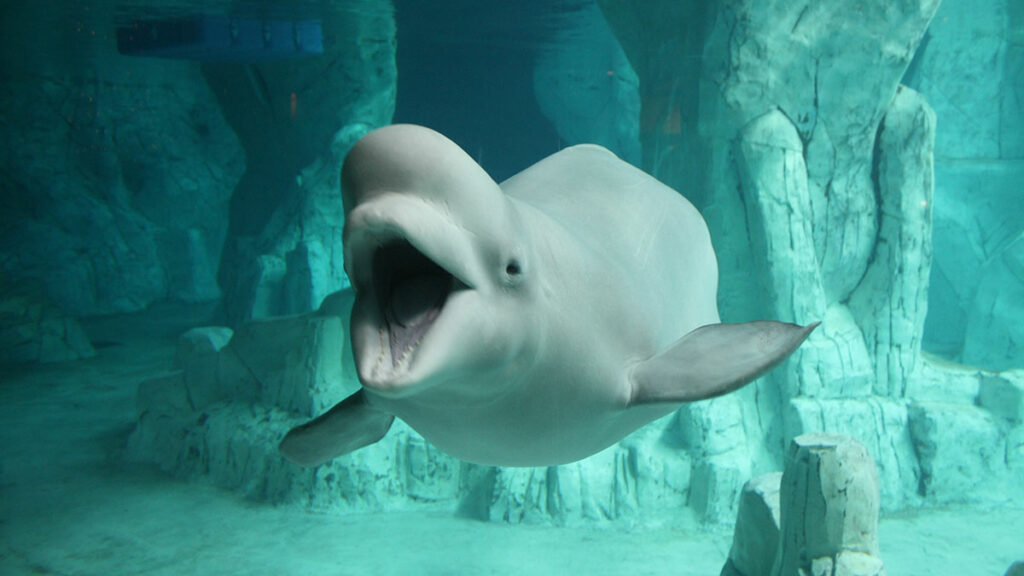
For scuba divers seeking an extraordinary experience, the Arctic and subarctic regions offer unparalleled opportunities to encounter beluga whales. Destinations like Churchill in Canada and the Russian Arctic are renowned for their beluga populations. Diving in these regions provides a chance to witness these majestic creatures in their natural habitat, creating memories that last a lifetime.
Beluga Whale Frequently Asked Questions
Beluga whale populations are estimated to be around 150,000 individuals today. Monitoring their numbers is essential for conservation efforts, and while they are not currently endangered, ongoing environmental challenges such as habitat degradation and climate change highlight the importance of continued vigilance to protect these enchanting marine mammals.
While beluga whales are generally considered friendly and curious, individual personalities and past experiences can influence their behavior. Not all belugas exhibit uniform friendliness, and interactions with humans can vary. Respectful and responsible approaches to wildlife encounters help foster positive interactions and protect both the animals and their natural behaviors.
Certain populations of beluga whales face threats, placing them in danger. Factors such as habitat degradation, pollution, and climate change contribute to the challenges they encounter. Conservation efforts are crucial to mitigate these risks and ensure the well-being and survival of beluga whale populations in their natural environments.
Conclusion
Exploring the world of beluga whales is a captivating journey into the wonders of marine life. From their unique characteristics to their cold-water habitats, these creatures continue to intrigue and inspire. For scuba divers, the opportunity to encounter belugas in their natural environment is an unforgettable experience, highlighting the importance of marine conservation efforts to ensure the well-being of these enchanting beings. Dive into the world of beluga whales, and let the magic of the ocean unfold before your eyes.