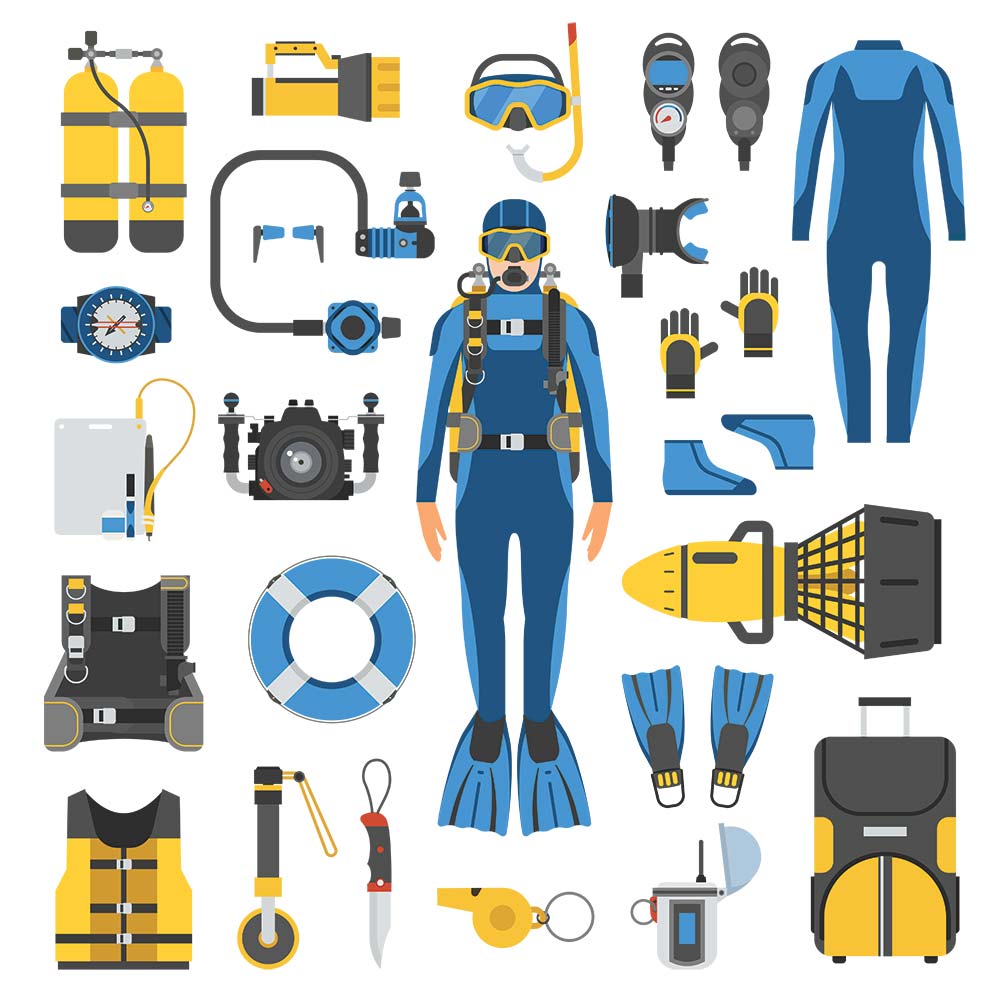
Just as man took to the skies like a bird with the airplane, scuba gear is man’s way of taking the plunge to explore the blue world underwater. Scuba Diving is an amazing way to discover what nature has in store for us with 70% of our planet covered in water. For those unfamiliar with the sport the equipment a diver uses may seem complicated and a little daunting to try, but this guide aims at pointing out the basic scuba gear a diver uses and how it works. If you choose to take up diving, a part of your scuba diving certification training is dedicated to the diving equipment, how to assemble gear and how to use it safely and responsibly.
Why You Should Own Scuba Gear
When you own your own scuba gear, you’ll be more comfortable in the water. You’ll know the gear fits and is in proper working order. While most rental gear is checked out by dive operation professionals, due to volume of use, sometimes little issues slip through the cracks. When you’re more comfortable in the water, you will consume less gas and your buoyancy will improve
When you own your own gear, you’re more likely to go diving! You won’t have to worry about going out to rent scuba gear. You’ll just be able to grab your gear and head to your local scuba dive site.
Basic Scuba Gear & Equipment Guide
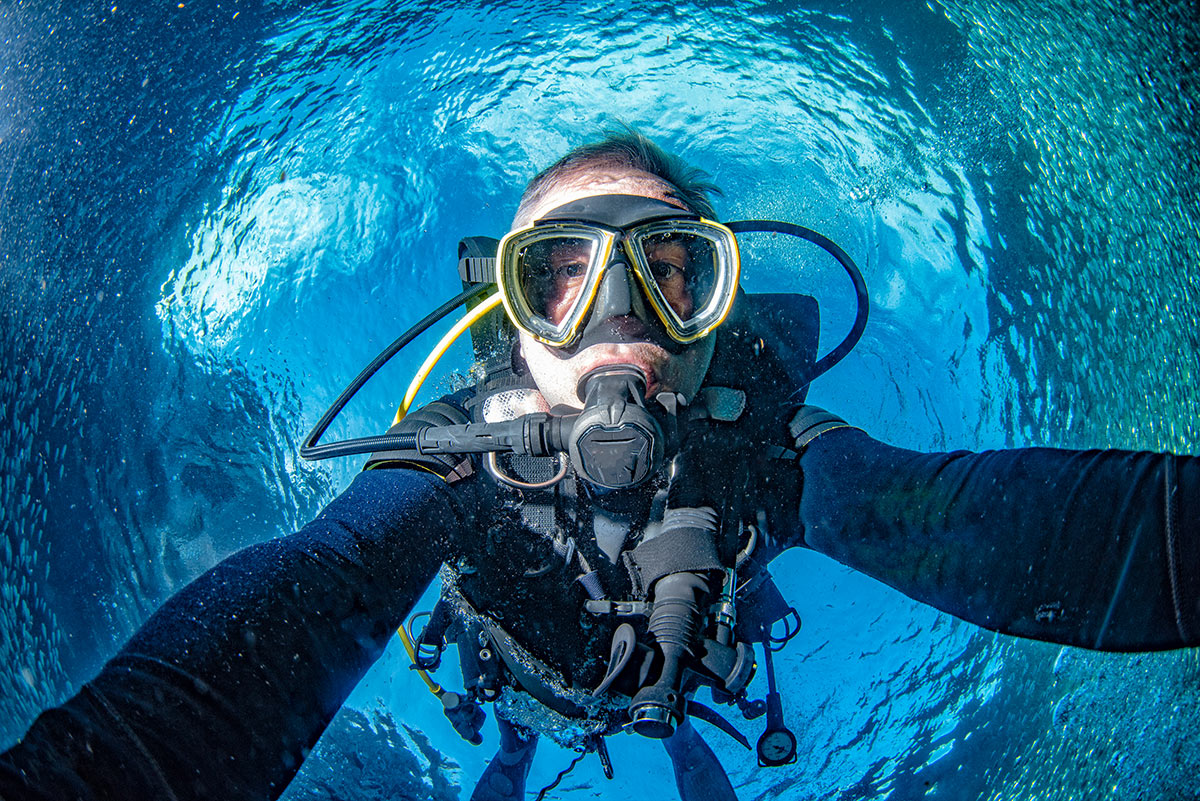
Mask
Needless to say, dive masks are your windows to the underwater world. Keeping water out of your eyes and making your view of coral, fish, sea mammals and other life that much clearer. Masks prove very important as they are have an air pocket in front of your face. This allows you to equalize your ears while descending.
There aren’t too many features in most masks, but here are a few to consider:
Mask skirt/frame color
A black mask skirt and frame is preferred by hunters and photographers or videographers because it helps to block out peripheral light.
Number of panes
Some masks are one continuous pane, many are two panes (one for each eye), but some masks can go all the way up to 6 panes! In theory, the number of panes (at least past 1 or 2) are designed to allow for side or bottom vision.
Mask profile
The mask profile is how far the mask sticks out from your face. Usually, the more panes a mask has, the higher the profile and the further the mask sticks out. If you intend to dive in strong currents or while using a diver propulsion vehicle, this can be hazardous. Also, a larger air space requires more air to equalize and can create some additional buoyancy concerns.
Purge
Masks can be purged (cleared of water) by pressing on the top edge, looking up and blowing out through your nose. If you have a purge mask, you have a small one-way valve somewhere (usually the tip of your nose) that you would make the lowest point so the water flows towards it, then simply exhale through your nose. While this can be convenient for one-handed mask purging, it is another part of your scuba gear that now has a working part, so you need to take care to clean it after each dive.
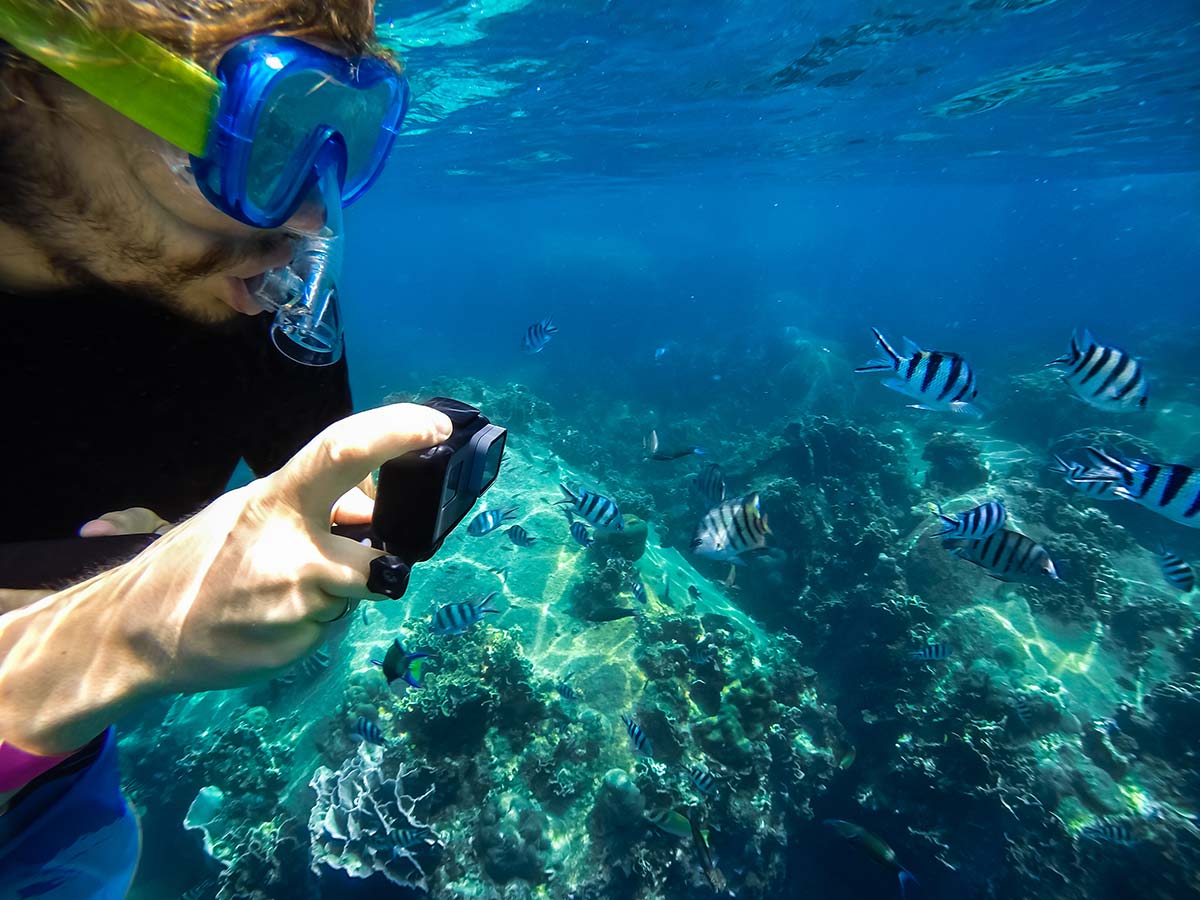
Snorkel
The snorkel on the other hand is not really considered a necessity but proves useful when breathing at the surface before descending, without having to use the air in your tank. This piece of scuba dive gear is often argued since most divers don’t actually use snorkels on their dives, but for a new diver, we still recommend it. For most training agencies, a snorkel is considered a required piece of scuba gear. Most people don’t share their toothbrushes, so would you like to share a snorkel with the thousands of divers who used the rental one before you? We didn’t think so.
Dry snorkel
There are a variety of technologies on the market, but some snorkels are sold as dry snorkels. While they aren’t usually 100% dry in the case of a wave, they have features designed to divert the water away from your mouth.
Articulated end
Some snorkels are one continuous piece of rigid plastic while others have a flexible rubber section between the top and the mouthpiece. This flexible rubber allows you to simply let the snorkel fall out of your mouth and it will move clear so you can replace it with a regulator. With a rigid snorkel, it doesn’t move as much when you remove it from your mouth and could possible get in the way of your regulator.
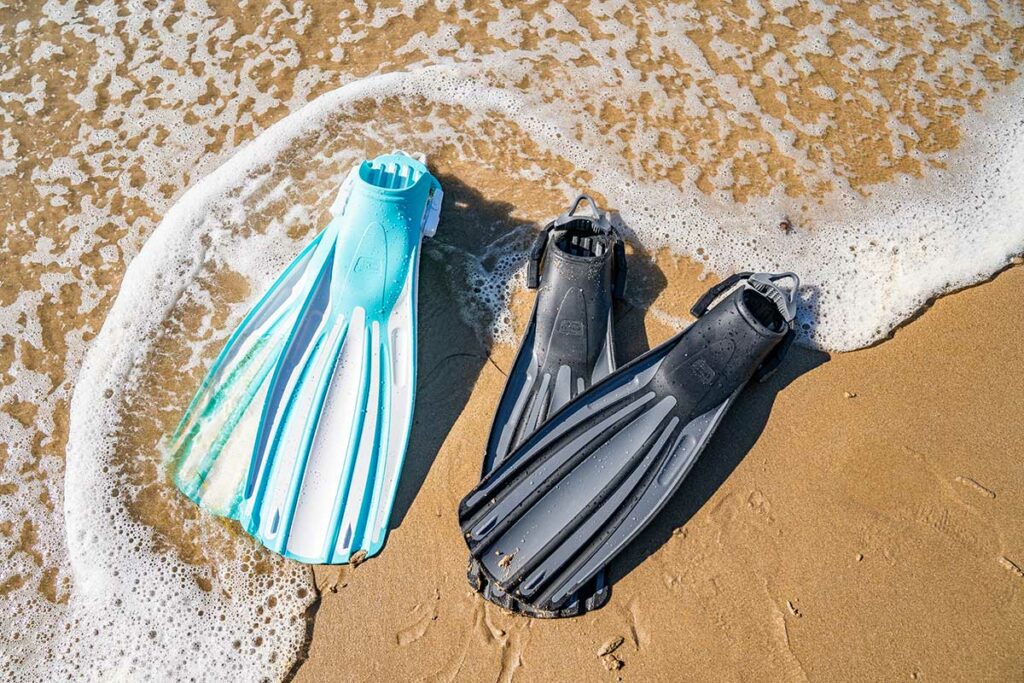
Dive Booties and Fins
Fins are to a diver exactly what a tail and fins are to a fish, a means for movement and propulsion underwater. Diving fins are important scuba gear in terms of helping a diver move with ease, navigate and work again currents. When a diver moves easily and effortlessly underwater using good scuba fins they in turn conserve more energy, thus using up less of their air supply. Dive booties are neoprene boots worn with fins for a snug fit.
Here are the most important aspects to consider when purchasing fins:
Fin type
There are a variety of types of fins and each has their pro’s and con’s. Fins are hotly debated in the dive community, so we’re just going to cover the basics.
Blade fins
These are the traditional style of fin. They are a large, mostly flat surface that extends off your toes. Blade fins can have ridges, vents or a wide variety of features, all designed to give you more power with less effort. If you anticipate moving into technical, cave or wreck diving, these are the de facto standard.
Split fins
As the name suggests, these fins have a split down the middle. Originally designed to provide similar propulsion as found in marine mammal tales, most people find split fins to be easier on their knees and requiring less effort to get up and going. Divers either love or love to hate split fins, but for people who don’t need a lot of power in their kick, have bad knees, hips or lower back and are more practiced in a traditional swimmers flutter kick, split fins are a great scuba gear option.
Hinged fins
Designed to give the easy and quick propulsion of split fins with the sheer power of blade fins, hinged fins are another option for divers. Some divers find them to be the best of both worlds, others find them difficult to feel comfortable in due to the way the hinge works.
Heel type
Fins are either open or closed heel. Unless you know you’re only going to be diving in warm water without ever having to walk across rough surfaces, most divers find an open heel fin combined with neoprene boots to be the ideal choice.
Heel strap
If you go with open heel fins, you’ll need a strap to keep your fin on your foot. Some straps have buckles that can be levered to quickly tighten them, others have straps that need to be pulled to tighten and others have spring straps that need no adjustment and can be pulled over your heel easily.

Wetsuit
Wetsuits are more than just dive apparel. Their primary function is for warmth. Made from neoprene, wetsuits preserve body heat by trapping a layer of water against the skin through the material. This water warms up because of body heat and acts as an insulator. Wetsuits unlike dry suits are not good insulators against very cold water but are decent protection from minor thermo clines (changes in water temperature at different depths) and are available in different thicknesses making them suitable scuba gear for diving in different water temperatures.
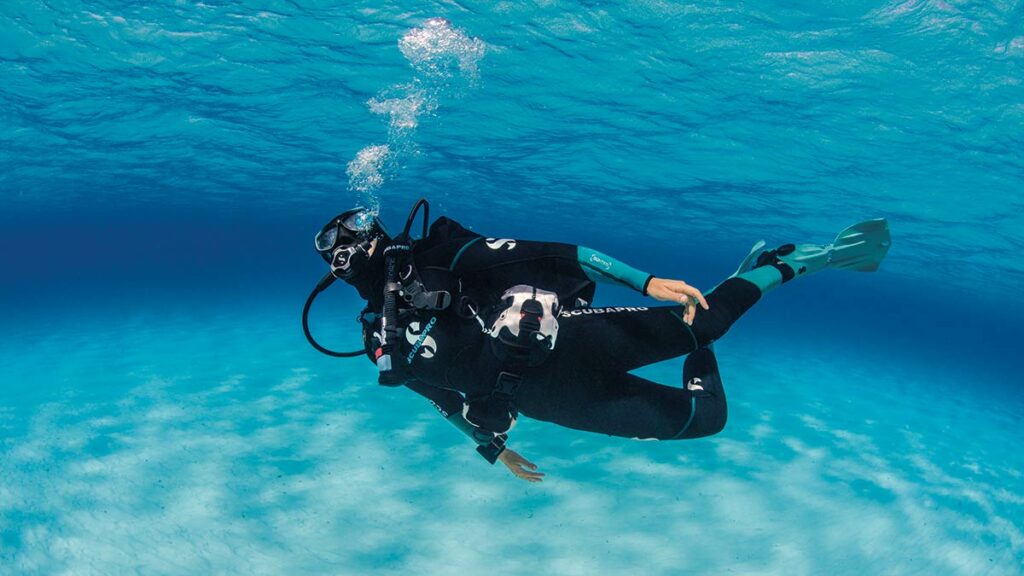
Tank
A scuba tank is where the air a diver breathes is stored. A common misconception about diving is that a diving tank is filled with oxygen, which is not true. For Scuba diving, the regular air we breathe is compressed at about 3,000 psi and filled in the tank/cylinder divers use. It has the same composition of regular air which is around 78% Nitrogen, 21% Oxygen and the remaining other gases.
Remembering to fill a tank and get it inspected as required isn’t so easy. But if you dive regularly or sometimes spur-of-the-moment, tanks are required scuba gear.
Valve
This goes back to our regulator setup. If you use a DIN regulator, get a DIN valve. Or, if you use yoke, get a K-valve. If you switch back and forth, get a DIN valve with a yoke insert.
Material
While composite tanks exist, the standard materials are either steel or aluminum. Steel tanks can be either high or low pressure which determines how much pressure is in the tank for it to be considered full. If you want to take full advantage of your DIN valve and get high pressure tanks, you’ll need a steel tank. Steel tanks are negatively buoyant throughout a dive while aluminum tanks become positively buoyant as they empty. Steel tanks can rust. If you use a steel tank, you can remove some weight from your BCD or weight belt.
Size
The most common rental tank is an aluminum 80 cubic foot tank. If you’re bigger or use more gas, go with a larger tank. If you’re shorter or are excellent with your gas consumption, consider either a smaller tank or the same cubic feet in a high pressure steel option which should result in smaller exterior dimensions.
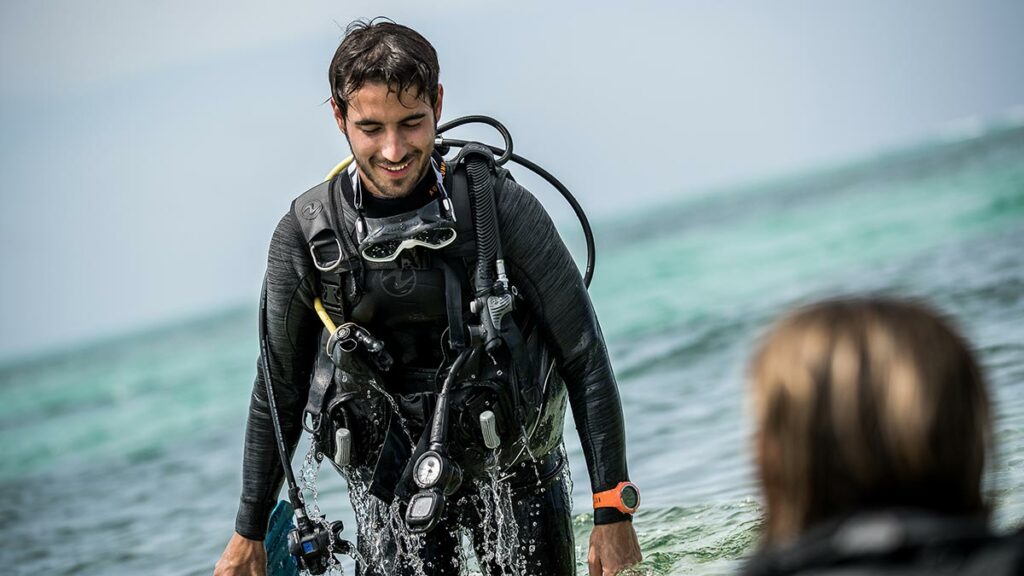
Buoyancy Compensator (BC) and Buoyancy Control Device (BCD)
A BCD or Buoyancy Compensator is a vest like fitted jacket to which the tank is strapped on and worn by a diver. The BC is connected via a hose to the tank and has air pockets which can be inflated and deflated with a push of a button allowing you to control your depth in the water and also compensating the weight of all the scuba gear including the tank used by a diver. Another way of inflating a BCD is manually as they have a mouth piece you can blow into.
Backplate and Wing or Jacket
For most recreational divers going through the bigger certification agencies, you may have never even tried a backplate and wing setup. If you’ve never tried one, before investing, we recommend finding someone in your local dive community that may be willing to show you theirs and even let you try it in the water. Some people love them, others don’t, but you can’t know if you don’t try. A backplate and wing tends to be a bit more streamlined with fewer pockets, but is also more customizable by allowing you to add D-rings where you need them. A jacket style is considered the norm in recreational diving.
Inflation Location
Some BCD’s inflate in the back, others inflate along the sides. A back inflate BCD is less restrictive when it is inflated since the air cell is on your back, but some people can have a hard time keeping their face out of the water on the surface. In a backplate and wing setup, inflation is in the back.
Storage
If you’re the type that likes to bring multiple backup lights, a spare mask and snorkel, a noise maker and more on your dives, you’re going to want a few pockets.
Weight Integration
With a weight integrated BCD, you can remove most or all of the weight from your hips and distribute it through your BCD.
Inflator
The standard inflator has a simple setup with an inflate and deflate button, plus a port to allow you to orally inflate should your power inflator malfunction. Some BCD’s allow for an alternate air source setup that integrates your backup second stage into the inflator.
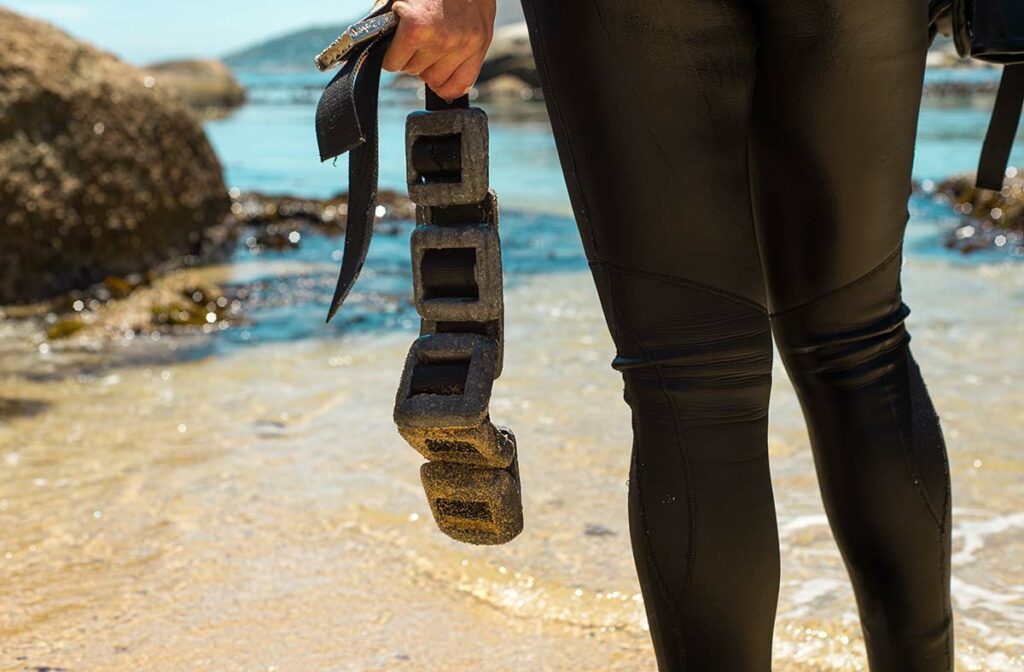
Weight Belt
People are positively buoyant and therefore need weights to help them descend and stay underwater while diving. Typically weights are added to a belt that goes around your waist or in some cases weights can be put into your BCD pockets. The amount of weight needed differs from person to person depending on body fat and a person’s natural buoyancy. Remember the following factors:
Material
The least expensive weights are uncoated lead. They hurt when dropped on toes, can damage fiberglass boats, can be a pain to get into your BCD’s weight integrated pouches and can be uncomfortable on the hips. This is what you’re most likely to find on vacation because tourists love to drop weights and dive operators don’t like wasting money on replacements. Next up are coated lead weights. These fix the boat damage issues and help a little with both the dropped-on-toe pain and discomfort on the hips, but that’s about it. Most expensive are soft weight pouches. These don’t hurt (much) when dropped on toes, don’t damage boats and slide into weight pouches easily. When worn as a belt, they are more comfortable on the hips and if made of neoprene are also depth-compensating.
Configuration
Even with a weight integrated BCD, some divers still like to have a belt. Some weight pouches can only accommodate certain sizes of lead weights. Some divers frequently switch between fresh and salt water. Make sure you get the right combination to work with your needs.
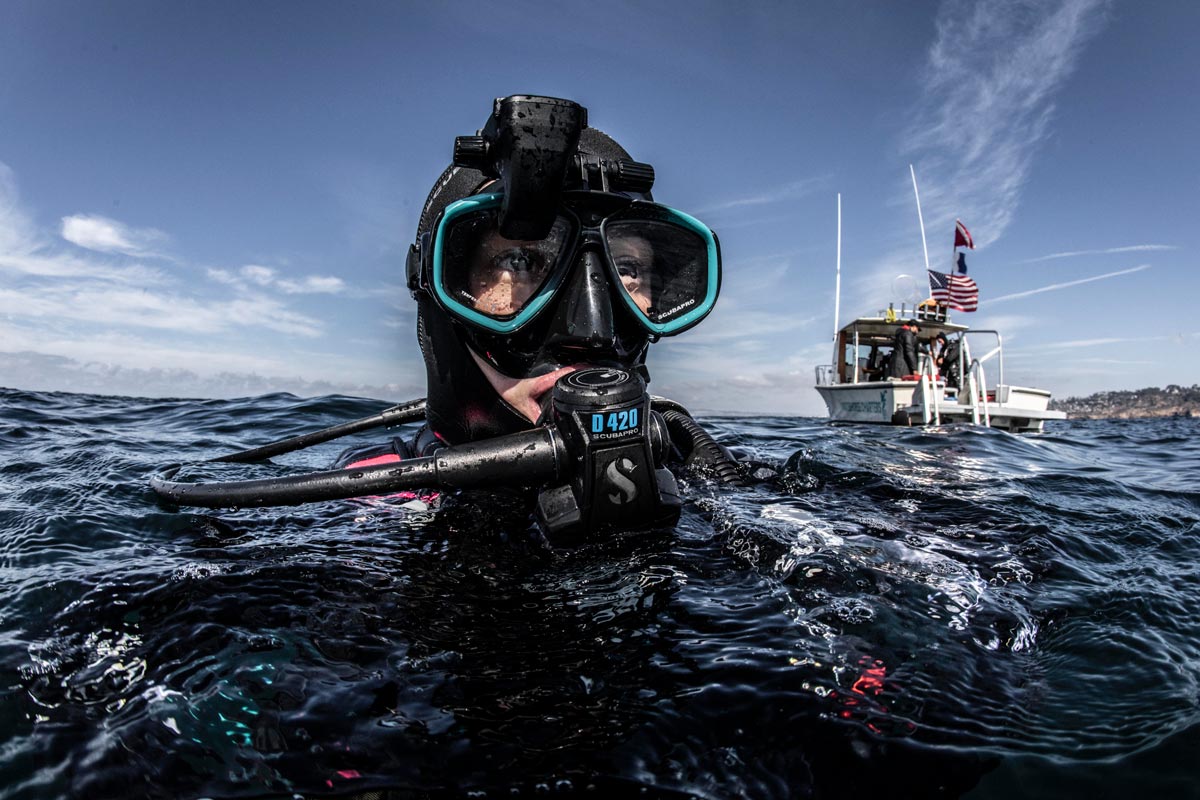
Regulator
A scuba regulator is what allows you to breathe underwater. The regulator attaches to the top of the tank and then has a hose connecting it to a mouthpiece allowing you to inhale air underwater. The main function of the diving regulator is that is reduces the pressure of the air that is stored in the tank from 3,000 psi to a safer level and more breathable 140 psi.
Your regulator is your primary life support system. Without it, you’d either be snorkeling or breath hold diving. In oversimplified terms, a regulator is comprised of three parts: a first stage that attaches to your tank valve, a second stage that goes into your mouth and a hose connecting the two. Depending on which regulator you choose, there could be many more parts, but those are the three standard components that make a SCUBA diving regulator. Here are some other features to consider:
Yoke or DIN
Yoke or DIN refers to the type of tank valve you’ll be using. A DIN first stage screws directly into a DIN tank valve while a yoke first stage slips over the top and is tightened to a yoke tank valve. DIN valves allow for higher pressure tanks and is a more secure connection which is valuable when diving in overhead environments like wrecks and caves, but yoke valves are more common globally. Not all first stages can be converted between the two, but yoke valve converters are sold for those who choose to use DIN.
Diaphragm or Piston
Again referring to the first stage, this feature controls how gas moves from your tank into the regulator. Piston is considered more reliable due to less moving parts and tends to offer a better air supply, but that isn’t typically noticed by recreational divers. Due to the precision of engineering, a piston regulator tends to cost more than a diaphragm. Diaphragm regulators are less likely to freeze when used in cold water diving.
Purge Button
You want this to be large enough to easily press with one finger even when wearing gloves.
Balanced
These days, you’d be hard pressed to find an unbalanced regulator, but they do exist. A balanced regulator makes sure you have virtually identical ease of breathing regardless of depth or tank pressure. Balanced regulators do have more working parts, so they may be more expensive to buy and maintain, but most divers find it’s well worth the investment.
Mouthpiece
The mouthpiece plays an important role in your diving comfort. Many manufacturers now include an ergonomic mouthpiece. Also look to see how easily replaceable the mouthpiece is because they do wear out.
Hose
Standard regulator hoses are stiff, heavy rubber that has been used for decades because it works. A new option is a braided design that goes by a few different names including Miflex and Maxflex. It is lighter, smaller and more flexible, but some divers are hesitant about new technology.
Alternate air source
Your alternate air source is a spare regulator used incase your primary regulator for some reason fails or if you need to share air with your dive buddy if he/she runs out. As you learned when certified, you need not one, but two second stages. If you chose not to get an air integrated BCD, you’ll want to purchase an alternate (also known as an octopus) to go with your new regulator. While not required, most divers choose to get an octopus from the same manufacturer who makes their first stage and primary second stage.
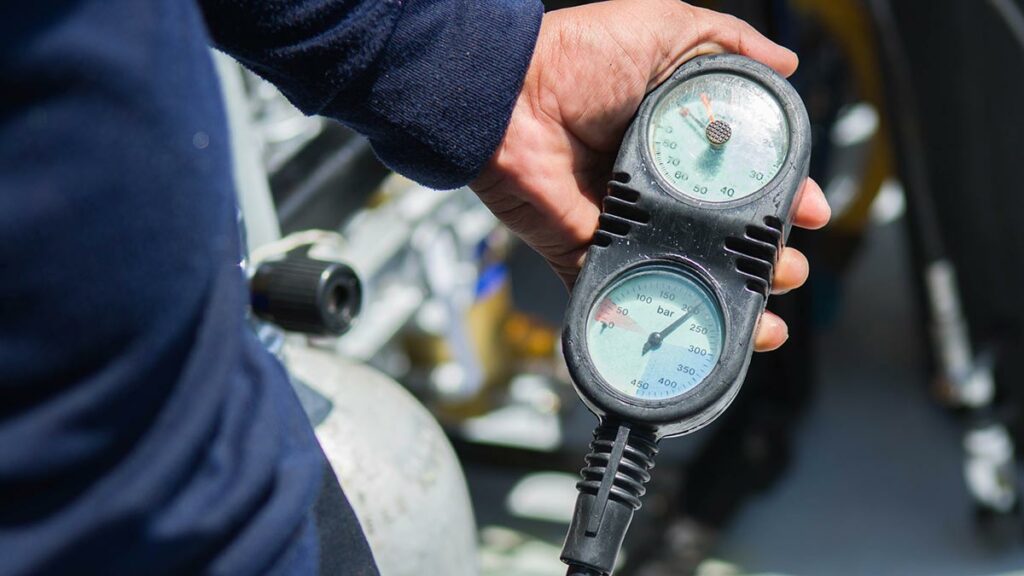
Pressure Gauge
Also connected to your tank is your pressure gauge, which indicates how much are is left in your tank during a dive. This gauge is also normally accompanied with a depth gauge on the same console. Sometimes a compass and dive computer can be added to the console.
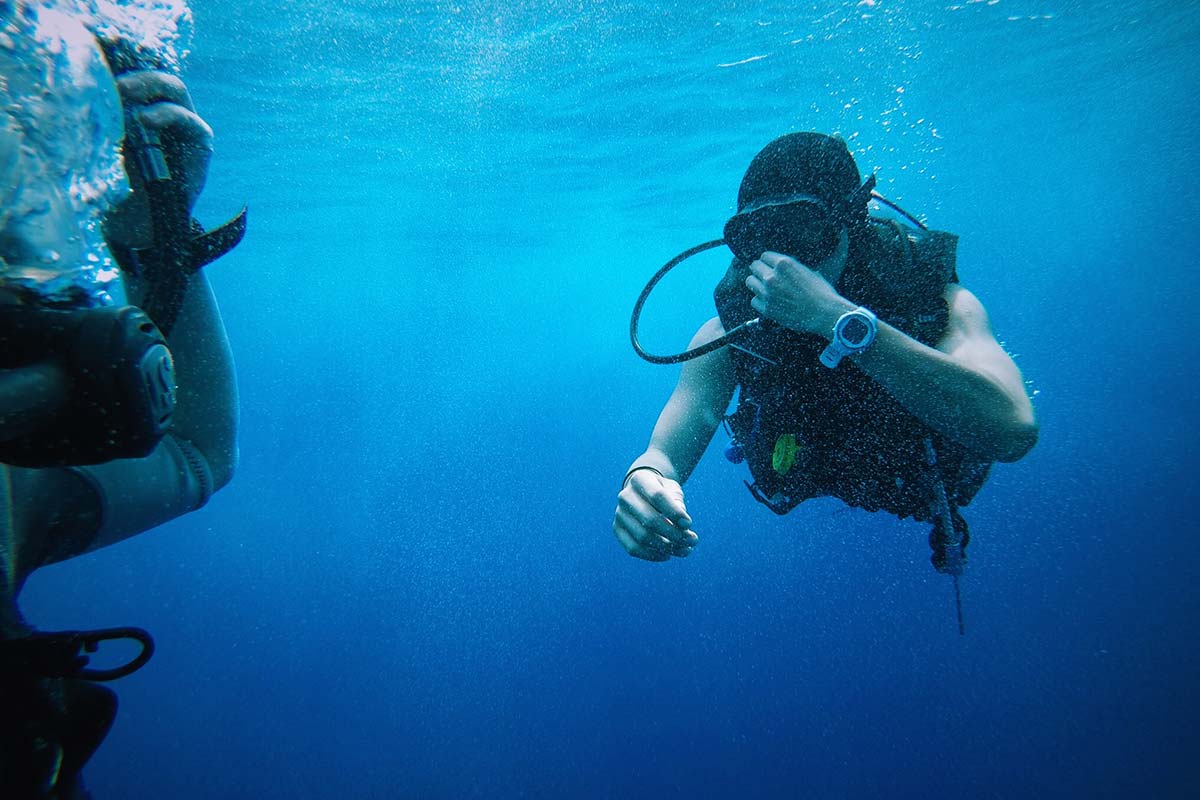
Dive Computer
All dive computers tell you four basic things: your current depth, your maximum depth during the dive, length of time underwater and how much longer you can stay safely underwater at any particular depth. Depending on the model of computer, it can also tell you much more information and have a lot of different features.
While some people still use dive tables, due to their dramatic drop in price, convenience and reliability, many divers choose to go with a computer. Here are things to look for:
Digital or Analog
You can go with a digital-only setup, an analog-only setup or a mix of the two. In a digital-only setup, you’ll have an air integrated dive computer that watches your depth, bottom time, air supply and typically much more. In an analog-only setup, you’ll have an analog pressure gauge and depth gauge. A common mixed digital and analog setup would be to have a computer track your depth and bottom time while an analog gauge tracks your air pressure. All-digital is typically more streamlined, but costs more and some people worry about if their computer “crashes”, although that doesn’t statistically happen often.
Hose or Hoseless
If you choose a digital setup, you can get rid of a hose. A transmitter mounts into your first stage and transmits all necessary tank information to a computer, typically worn on the wrist.
Navigation
Digital compasses built into dive computers are still relatively new and usually in higher-end computers, so you may still need to add on a traditional compass.
Computer Connectivity
Some computers can be synced to your personal computer to more effectively track your dives. Sync cables usually are not included and can be in the $50-100 range and some of the computer software looks like it comes from the double-hose regulator days, so conduct a little research first before deciding if this is a must-have feature.
Enriched Air Compatibility: If you plan on diving enriched air (air that has a higher concentration of oxygen than normal air), select either a gauge setup that is enriched air compatible (typically just different o-rings) or a dive computer that allows you to enter your oxygen percentage.
Type of Diving
If you plan on entering into technical diving, most divers go one of two ways: either far more basic or far more advanced. Some computers can handle multiple gas switches on a dive as well as use multiple transmitters to hoselessly get pressure information. If you go more basic, you’re likely to want an analog pressure gauge, a wrist mounted compass and a basic depth and bottom timer.
Knife or Cutting Device
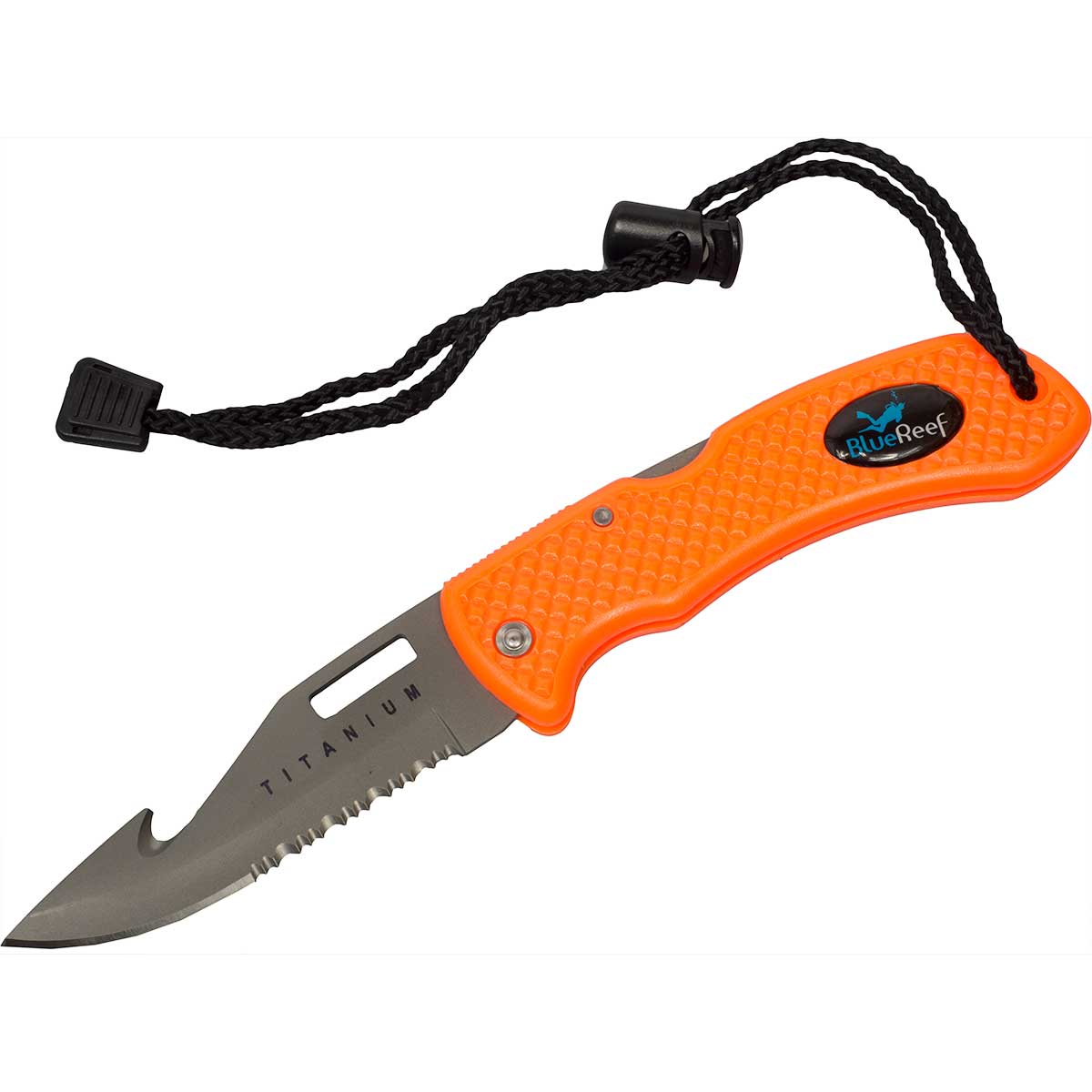
As your dive manual states, a knife is a tool, not a weapon. And an incredibly valuable tool at that! If you ever dive in kelp or near fishing areas, a good cutting device is worth its weight in lead.
- Knife or other cutting device: A knife is most common, but for cutting fishing line (a common entanglement issue for many), a knife requires a third hand to be effective. So a cutting device or shears can be a better option for some diving conditions. If you want to be safe, get a knife and a cutting device and you’ll have all your bases covered.
- Size of knife: Unless you plan on stabbing something big with your knife, a small blade will work great as a tool and is easier to attach in a variety of places.
- Material: Titanium is lighter, but more expensive. Most people find stainless steel to be most durable and less expensive, but heavier.
- Tip: Tips can be square or pointed. Again, if you’re going to be stabbing something, go with a point. If you’re going to be using it more as a tool, get a squared tip.
Primary Light
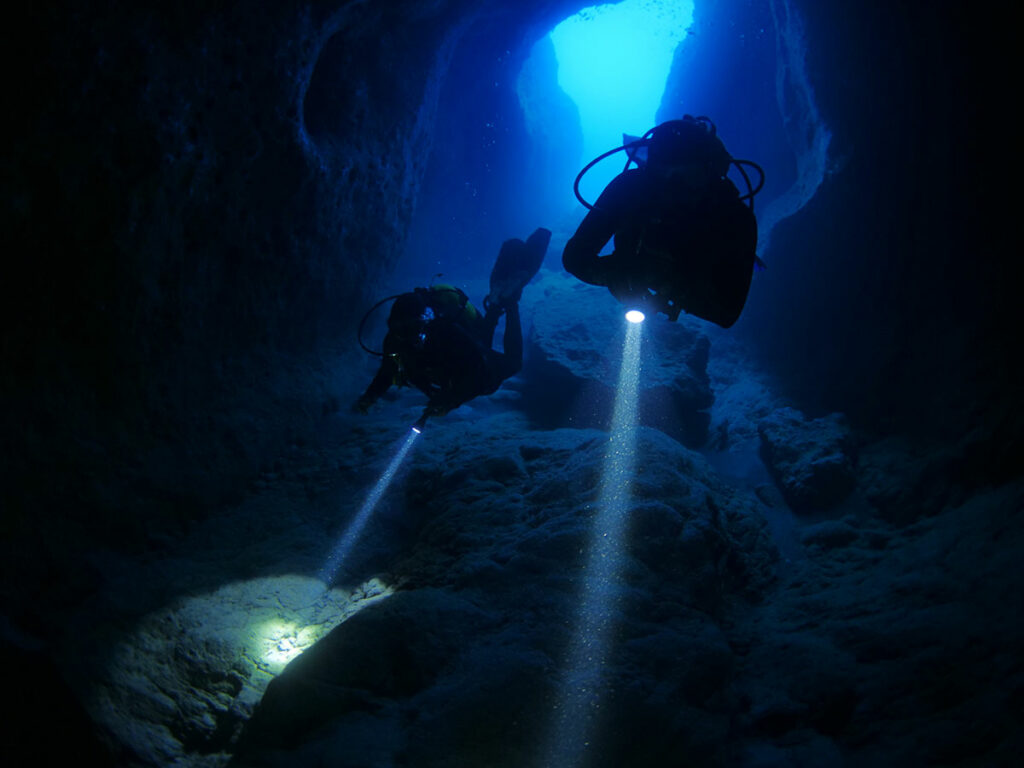
If you want to do night dives or want to look into nooks and crannies that require more power, you’ll need a primary light. Here’s what to look for:
Light Type
Primary lights usually come in one of two styles, hand-held or a canister light. A canister light has a battery pack the is mounted, usually on the hip but sometimes to your tank, with a cord that attaches to a light head held in or on your hand. A hand held light is a self contained unit. Canister lights can be brighter, are rechargeable usually have longer burn times, but are also heavier, are more expensive and can have a bit more scrutiny under the eyes of the TSA.
Bulb
With primary lights, we usually see either HID (High Intensity Discharge) or LED. HID can be brighter and many divers find it penetrates sediment better due to its color temperature, but it is also more expensive and fragile. Either way, you’ll have plenty of light.
Backup Light
Compact, durable and easy to travel with, you’ll be surprised at how much you use your backup light. Even on day dives, having a backup light allows you to restore the colors lost by refraction. Plus, you never know what you might find under a rock or amongst the nooks and crannies of your favorite dive site. Here’s what you should look for:
Bulb type
For the longest time, the standard bulb was a traditional incandescent bulb. They were bright, but got hot and used a lot of battery life. Then came high intensity discharge (HID) bulbs which were much brighter and significantly cooler, but fragile and expensive. Now, one of the most popular bulb types is light emitting diode (LED) due to its reasonable price, low temperature output, energy efficiency, color temperature and durability. Unless you know you have a specific need for something else, LED lights are a wise choice for the majority of divers.
Size
Size is dictated by number and type of batteries. A light that requires 8 D-cell batteries will be larger and heavier than one that uses 2 AAA-batteries. The more and larger batteries, the longer the burn time, or time the light stays at full brightness. Most popular backup lights are powered by 3 or 4 C-cell batteries.
Battery Type
Some lights use rechargeable batteries, some use standard disposable alkaline batteries. From an environmental standpoint, rechargeable would be best, but there are some items to consider: airport security around the globe isn’t standardized on what batteries are allowed so you may lose them at some point, rechargeable batteries require bringing recharging devices and if you forget them you can’t recharge and not all rechargeable batteries fit the same as their disposable counterparts. This isn’t to suggest you should avoid rechargeable, but these are points to consider since they are typically more expensive.
Surface Marker Buoy
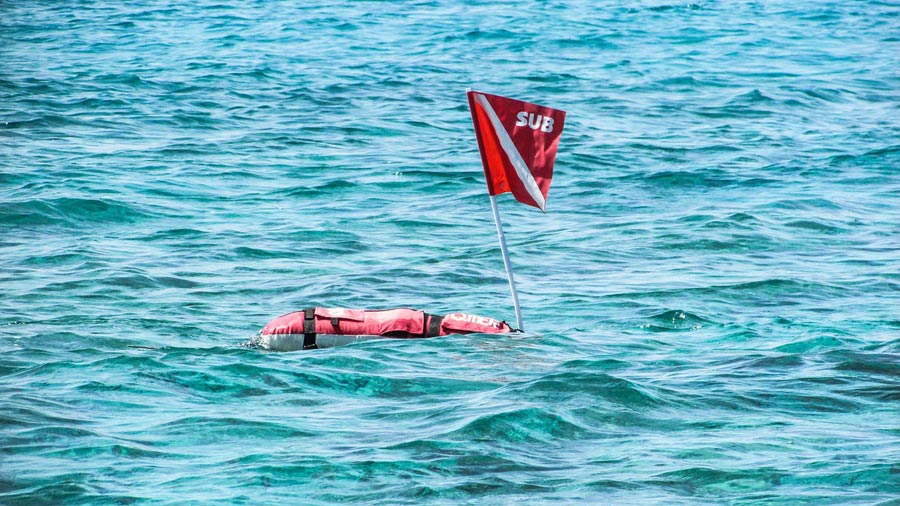
If your dives so far have been with dive professionals, you may have noticed they probably brought a float and flag to indicate your presence to those on the surface. This is incredibly important because it helps to prevent boats and jetskis from carelessly running you over while you ascend. While dive professionals often use larger, inner-tube style floats (or support platforms), a diver can accomplish the same surface safety using a surface marker buoy (SMB). Not all SMB’s are created equal though:
Size
We recommend using an SMB that is at least 5′ long, preferably 7′. If you are on the surface in choppy conditions, a longer SMB will allow boaters to see you more easily. Since SMB’s roll up, a 7′ SMB can still fit easily into a BCD pocket or be unobtrusive when clipped to a BCD D-ring.
Inflation methods
Depending on which SMB you choose, you can have a variety of options on how to fill it with air. Attaching it to a BCD low pressure hose, inflating it with your lungs or holding a purged regulator underneath the opening on the bottom are all common options. Our personal preference is a sealed SMB with an oral inflate port. For us, it works easiest in rough conditions. Some models come with a variety of methods, this is ideal.
Over-pressure relief valve
As you learned in your certification course, air expands as it ascends. If you fill a sealed SMB at depth and let it go to the surface, you don’t want it to burst. An over-pressure relief valve, similar to ones found on most BCD’s will allow your SMB to dump air instead of exploding.
Lift bag
Some SMB’s are also rated to act as a lift bag, helping you to lift and move heavy objects while underwater. Be sure yours is rated to lift before attempting to recover a heavy object and we’d also recommend a search and recovery course to learn how to use lift bags effectively.